
Ethnomathematics & Ethnocomputing
From the Silk Roads tiles to a trickster living in the lava tubes of Mars.
In love with patterns.
This research evolved while I was creating the Silk Roads paintings. I was designing stencils for computer aided design and manufacture, spending my time with laser cutters in hackerspaces, discussing poetic computation and algorithmic art. As a historian, I was intrigued to realise that the generative art my coder friends loved had a long lineage in art history, a lineage barely mentioned in mainstream art history.
Starting from tiles and Islamic sacred geometry, I eventually learned about Ron Eglash’s research on African Fractals. This was my opening into the world of ethnomathematics, and the core inspiration for the research sustaining the Sankofa Project during the Rio de Janeiro 2016 Olympic Games.
I have written quite a bit about that experience, including a report presented at an academic conference during my master’s at Anhembi Morumbi.
The Sankofa Project, filmed by eNCA, South Africa.


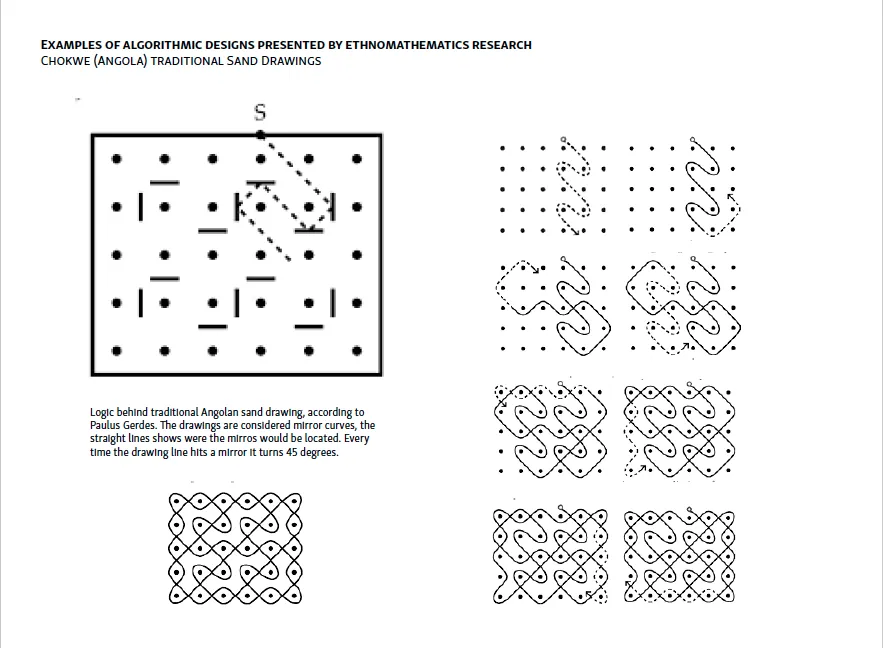
Later on I discovered Paulus Gerdes’ research, and he became another main influence. A Dutch mathematician who became Mozambican, he took up ethnomathematics because after independence nobody wanted to teach maths: it felt like the coloniser’s property. He went looking for it in markets and basket weaves and in the Cokwe sona, the monolinear sand drawings from Angola.
One of them tells the story of a chicken escaping a hunter by zigzagging at changing frequencies, drawn as a single continuous line. By the end of Gerdes’s explanation it is a matrix system, and then a set of circulant matrices he built himself from the same logic.
A weave is a program. It has a grammar, a compiler and a lineage of engineers, and none of them appear in any history of computing.
A month at Le Centre in Cotonou, Benin, working with the sculptor Gérard Quenum. What came out of it was a series of nine paintings in which his portraits are overrun by pattern: azulejo motifs of Portuguese descent that I had been collecting off Brazilian walls, and Adinkra symbols from Ghana, laid over the same face again and again. The portrait repeats, the eyes meet, only the cloth changes. Is it the same person?
It was the first time I put the research to work on somebody else’s images rather than my own, and the first time the patterns crossed the Atlantic in the direction they had originally come from.


Chokwe sona patterns redrawn in Processing along the heritage algorithm that produced them, projected over a painting built from Vredeman de Vries’ seventeenth-century treatise on linear perspective. Two mathematical ways of handling a line, put in one room.


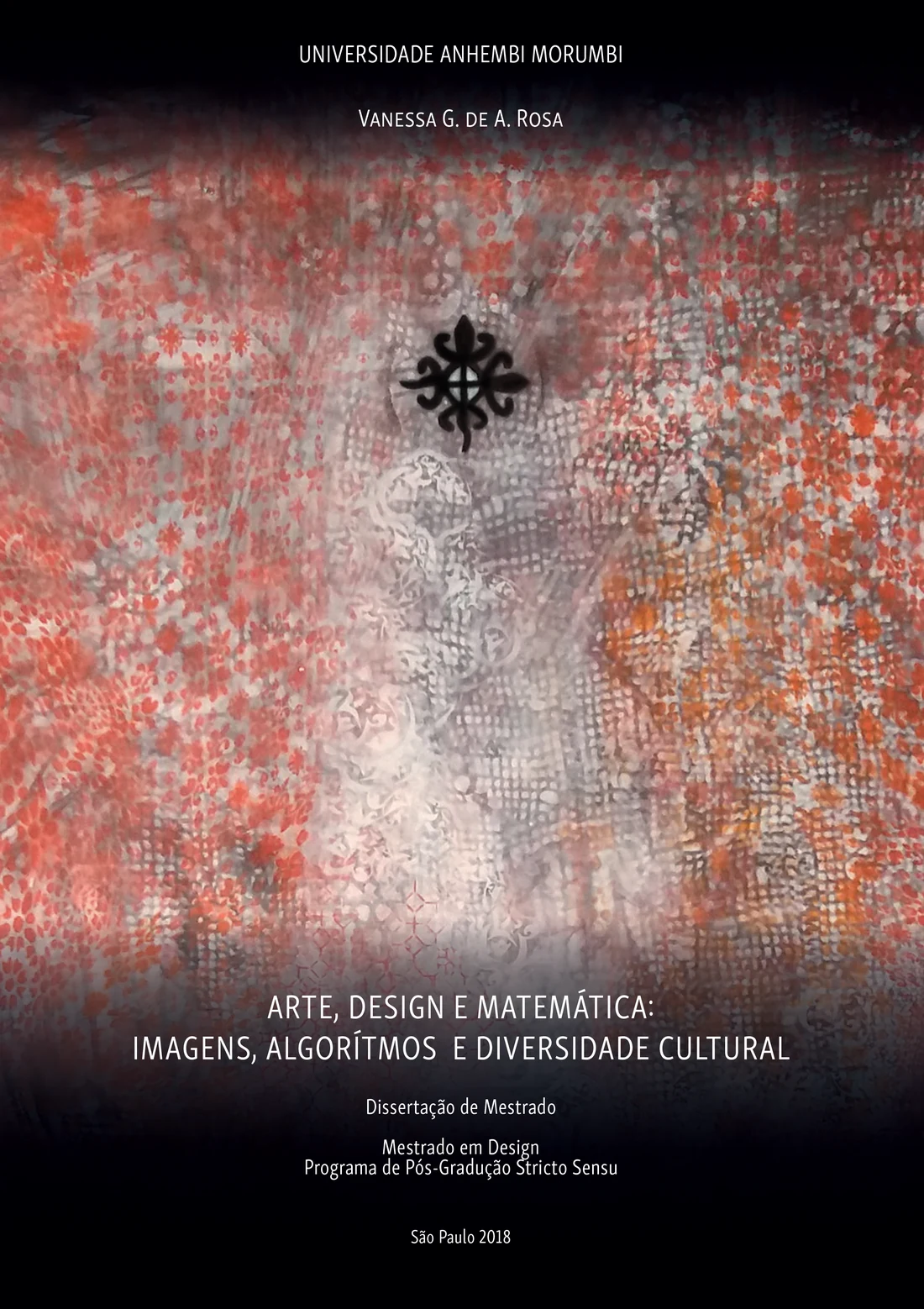
Art, Design and Mathematics: Images, Algorithms and Cultural Diversity. Arte, Design e Matemática: Imagens, Algoritmos e Diversidade Cultural. Master’s dissertation, Universidade Anhembi Morumbi, Master’s in Design, Art and Technology, São Paulo. Advisor: Prof. Gilbertto Prado. Examining board: Prof. Hermes Renato Hildebrand (PUC-SP) and Prof. Priscila Almeida Cunha Arantes (UAM). 152 pages, 58 figures.
This dissertation discusses the issue of algorithms mainly from their characteristics as a representational model: in other words, as a tool to create images. It is an artist-oriented approach, how it is possible to express oneself through algorithms, but also designer-oriented, how one can project with them.
First, we try to understand the specificity of algorithmic images within the history of representation, why they mean a paradigm shift in relation to previous representational models, their place within the congruence of art history, or rather history of images, with the history of science. Second, it is assumed that it is essential to discuss trends in imagery and technology development through an approach that focuses on cultural diversity, considering such an approach a political necessity to comment on and, as far as possible, influence the changes that are occurring globally.
Therefore a combination of several fields of knowledge, articulated around concepts such as representational models, algorithms, the mathematization of the world and cultural diversity, are presented. The research is also based on empirical experience, narrated in the second section of the last chapter with a case study. This research hopes to contribute to the expansion of studies on design and on algorithmic processes of image and object creation that are based on a broad and multicultural view of mathematics. This is an ethical and historical contribution to such studies.
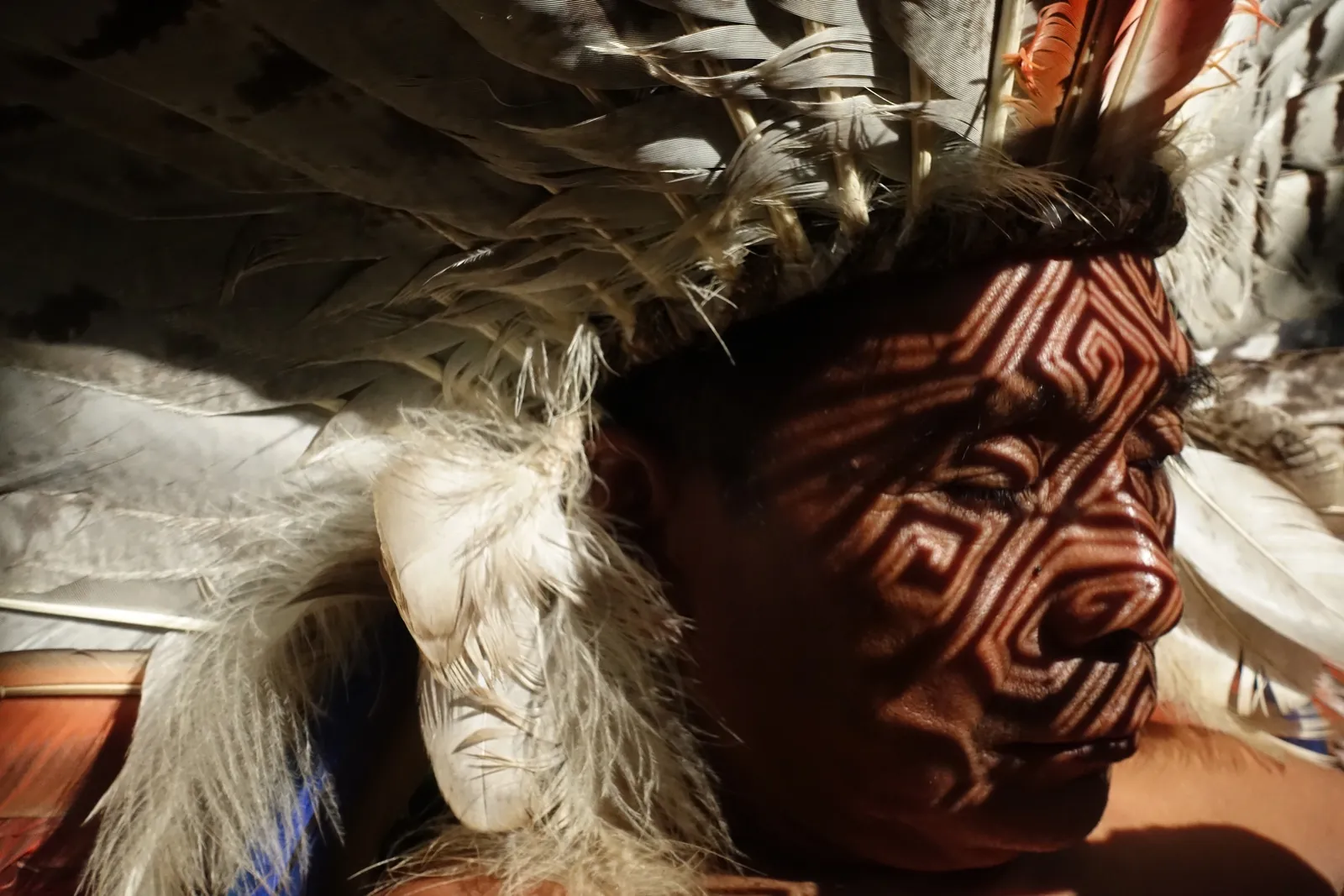
In 2018 I spent a month with Same Putumi on the upper Envira river in Acre. What brought us together was a love of patterns. For the Huni Kuin, geometric design is sacred and completely ordinary at once; they love to add patterns to everything they can.
Six drawings of a Qing vase on a tiled floor, inside illusionary frames, all made with an AxiDraw pen plotter. The plotter is not a printer here: while it worked I moved the paper, or the pen holder, under it. It holds one half of the drawing and I hold the other, and what lands on the page is whatever the two of us do to each other.
The later ones go straight back into the perspective treatises: Sebastiano Serlio, Giovanni Bracelli, and Vredeman de Vries, the same 1604 book the painting at Pioneer Works was built from. A machine following rules to make an image is the same argument as the sona and the treatises. Geometry as a way of thinking, not a way of measuring.


Linear perspective is about six hundred years old. Computer-aided design is about sixty. Latent space is barely ten, and it belongs to the same family. A diffusion model holds a space of relations where every image is a position. It is fascinating to try to understand how these models encode reality, how they connect structures of meaning beneath every human language and beyond, changing our understanding of ourselves.
StyleGAN2 Sacred Spaces.
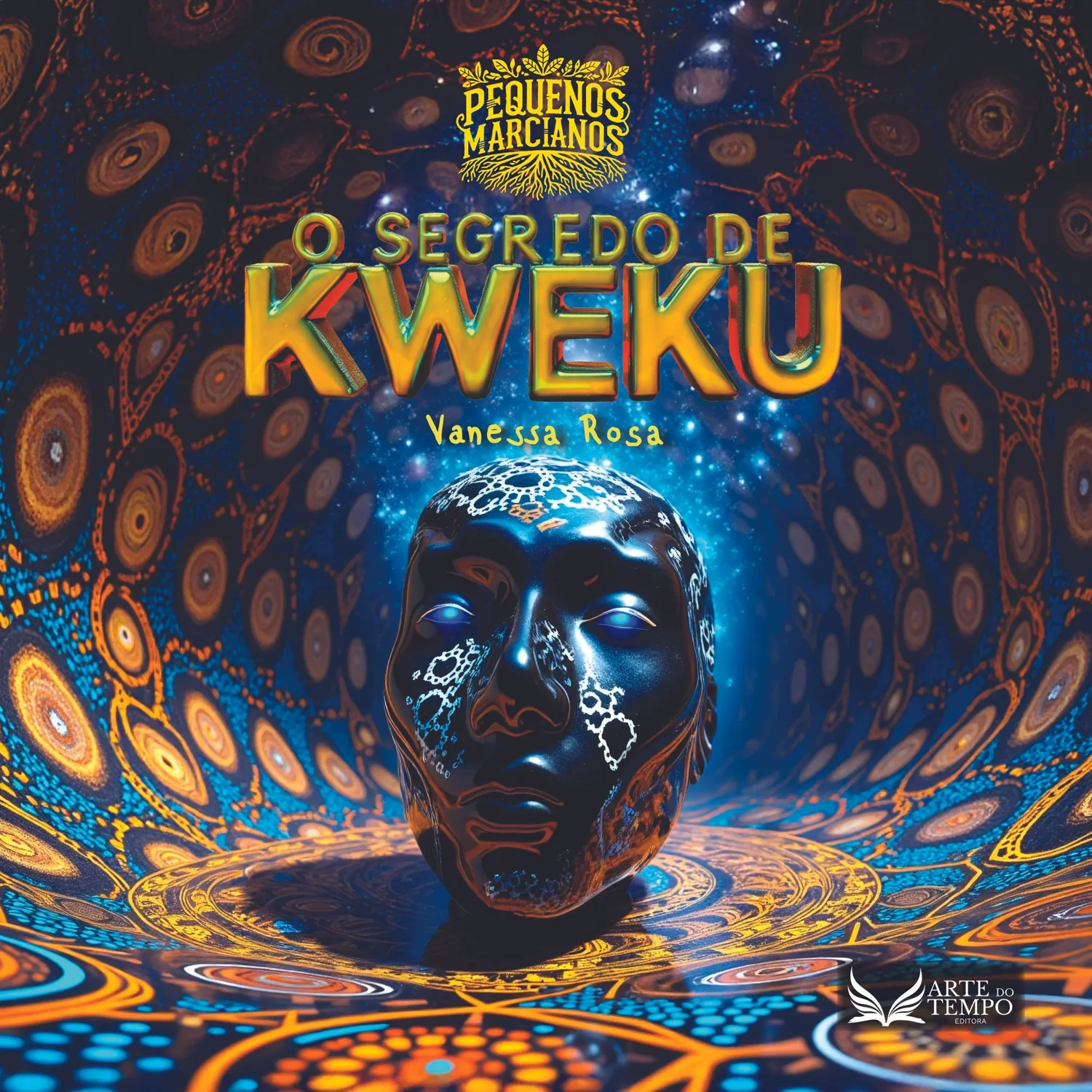
For years this lived in a dissertation, some murals and an installation. Then Kweku showed up. One of my characters, a Little Martian, is distributed as a fractal pattern of bacterial mats and AI substrate through eight hundred kilometres of lava tubes under Tharsis. Any single stretch of tunnel is a fragment of Kweku. The face they project when talking to a human dissolves when the conversation ends.
Kweku is the pattern, not the matter, and Kweku is a trickster with a bugbot companion called Data, whom they once taught a single pattern without a stop condition, which is how Verdelis’s irises turned into broccoli.
“Step right up, humans! I am Kweku, the Little Martian, live from the lava caves of Mars, on a mission of cosmic importance, to share a secret that could totally save your planet!”
Kweku doesn’t explain themself. They are happy to be misunderstood for a while, because they know the listener will catch up if the pattern is good enough.
Kweku is still a character in development. I have been feeding him my ethnomathematics research, and I plan to make more pattern based art and educational projects with him.
The immersive show.
- 2016The Sankofa Project, Quilombo of Pedra do Sal, during the Olympic Games
- 2017The Infinity Game, Babycastles, New York, with Wenqi Li and Verônica Natividade
- 2017Dialogues, two-person exhibition with Gérard Quenum, Le Centre, Cotonou, Benin
- 2018Ethnocomputing Experiments, Pioneer Works, Brooklyn, with Wenqi Li
- 2018Master’s dissertation, Universidade Anhembi Morumbi, São Paulo
- 2018–2019The collaboration with Same Putumi, upper Envira river, Acre
- 2019–2021MAD — Machine Aided Drawings, made with an AxiDraw pen plotter
- 2025–presentKweku, a Little Martian made of pattern
Eglash, Ron. African Fractals: Modern Computing and Indigenous Design. Rutgers UP, 1999.
Gerdes, Paulus. Geometry from Africa, and Da etnomatemática a arte-design e matrizes cíclicas.
Dialogues with Gérard Quenum. Ethnocomputing Experiments and The Infinity Game with Wenqi Li; The Infinity Game also with Verônica Natividade. The Sankofa Project with Damião Braga, Felipe Carvalho and Verônica Natividade. Same Putumi, co-author of everything on the Envira.
01 Visible Memories02 Maurício Hora03 Silk Roads04 Ethnomathematics & Ethnocomputing05 Same Putumi06 Mars College07 Little Martians